

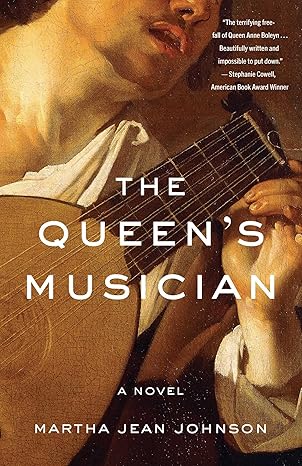
The Queen's Musician by Martha Jean Johnson
JA glamorous queen, a volatile king, a gifted musician concealing a forbidden romance. Everyone knows Anne Boleyn’s story. No one knows Mark Smeaton’s.
On May 17, 1536, a young court musician was executed, accused of adultery and treason with the queen. Most historians believe both he and Anne Boleyn were innocent—victims of Henry VIII’s rage.
Mark Smeaton was a talented performer who rose from poverty to become a royal favorite. He played for the king in private and entertained at sumptuous feasts. He witnessed Anne Boleyn’s astonishing rise and fall—her reign of a thousand days. History tells us little about him, other than noting his confession and execution. The Queen’s Musician imagines his story, as seen from his perspective and that of the young woman who loves him. It all takes place amid the spectacle and danger of the Tudor court.e courage to step through the door.
Time Period: 1520s–1536
Primary Location: London
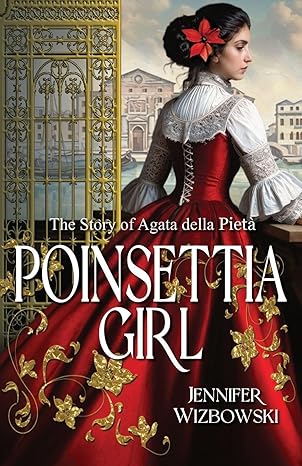
Poinsettia Girl: The Story of Agata della Pieta by Jennifer Wizbowski
Venice, 1710, Poinsettia Girl is based on the story of Agata de la Pieta, an orphan musician of the Ospedale de la Pieta. Ten-year-old Agata's world is shaken at the sudden death of her mother. Left only with her egregious father, a working musician in Venice, her ailing grandmother sends her to the well-known orphanage, hidden from everything she's ever known.
Agata auditions for the conservatory style music school where music is both salvation and spectacle. Hidden behind ornate metal grates, adorned with poinsettias in their hair, the singers are veiled in mystery, their ethereal music drawing noble audiences, including gilded young men who see them as treasures-not only for their sound but as coveted marriage prizes. Just as she reaches the height of her musical journey, a marriage proposal from someone outside the audience tempts her with the promise of a new life-a return to the old neighborhood she's longed for and a home she barely remembers. Torn between the music that has defined her and the hope of belonging to a family, Agata must confront the most profound question of her life: is her purpose rooted in the music that shaped her, or in the love that might free her?
Time Period: 1710s
Primary Location: Venice
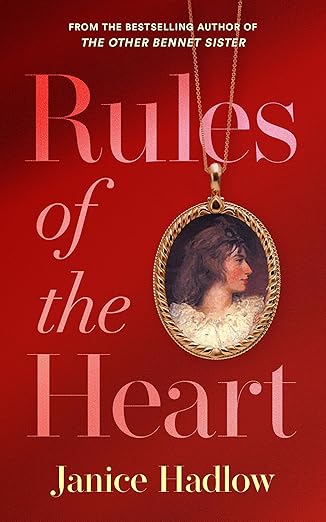
Rules of the heart by Janice Hadlow
England, 1794. Now in her thirties, Lady Henrietta Bessborough is no stranger to the affections of a younger man. For married women of the Ton, a young lover is encouraged, provided you know how to play the game : don't embarrass your husband and maintain complete discretion at all times. A beautifully evocative historical novel inspired by a real-life 18th-century love affair.
Time Period: Late 1700s
Primary Location: London
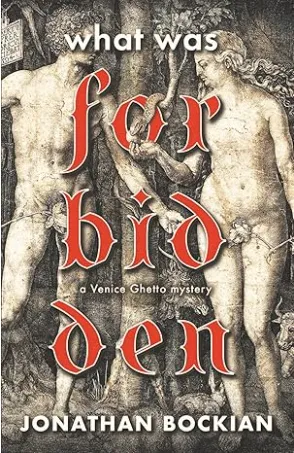
What Was Forbidden: a Venice Ghetto mystery
The Ghetto of Venice, 1672. When a brother is killed, will the truth be buried with him? Faith, freedom and obedience collide as one woman risks everything to remain true to herself and to the brother she loved.
When Yehudit’s beloved brother Mordechai is found murdered, her search to know what happened upends her world. In his life, Mordechai—disaffected merchant, outspoken skeptic—secretly defied expectations his family, religion, and the Ghetto community placed on one of their own, and limits imposed by gentile Venice. As Yehudit exposes conflicts that shaped Mordechai’s final weeks, she increasingly must challenge restrictions and controls on her life as a woman. Yehudit’s determination to find and speak the truth sets her on a collision course with her family and the entrenched Ghetto power structure.
Inspired by a true event memorialized in the Venice Ghetto, WHAT WAS FORBIDDEN is set within the backdrop of two historical movements—one religious, the other political—each of which ignited hopes of freedom but in diametrically opposite ways.
Time Period: Late 1860s
Primary Location: Manchester
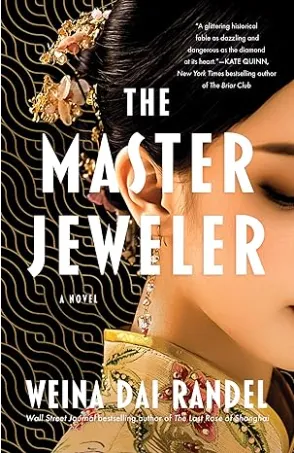
The Master Jeweler by Weina Dai Randel
Harbin, China, 1925. Fifteen-year-old Anyu Zhang discovers a priceless Fabergé egg in the snow and returns it to the owner, Isaac Mandelburg, a fugitive and former master jeweler for Russia’s imperial palace. In gratitude, he leaves her his address in Shanghai and a promise of hospitality, forever altering her fate.
A dazzling world of jewelry shrouded in secrecy and greed awaits, when later Anyu arrives at Mandelburg’s jewelry shop as an orphan. Single-minded and relentless, Anyu will stop at nothing until she masters the craft of jewelry making. But she soon finds herself entangled in the treacherous underbelly of the city, where violent gangsters stalk the streets, vicious rivals seek to exploit her, and obsessive collectors conspire to destroy the people she loves.
From snow-crowned land to diamond-sparkling showrooms to a pristine island on the brink of war, The Master Jeweler chronicles an exciting journey of a bold prodigy artisan―including her losses and triumphs―in a glamorous yet perilous world of treasure.
Time Period: Late 1500s
Primary Location: Florence
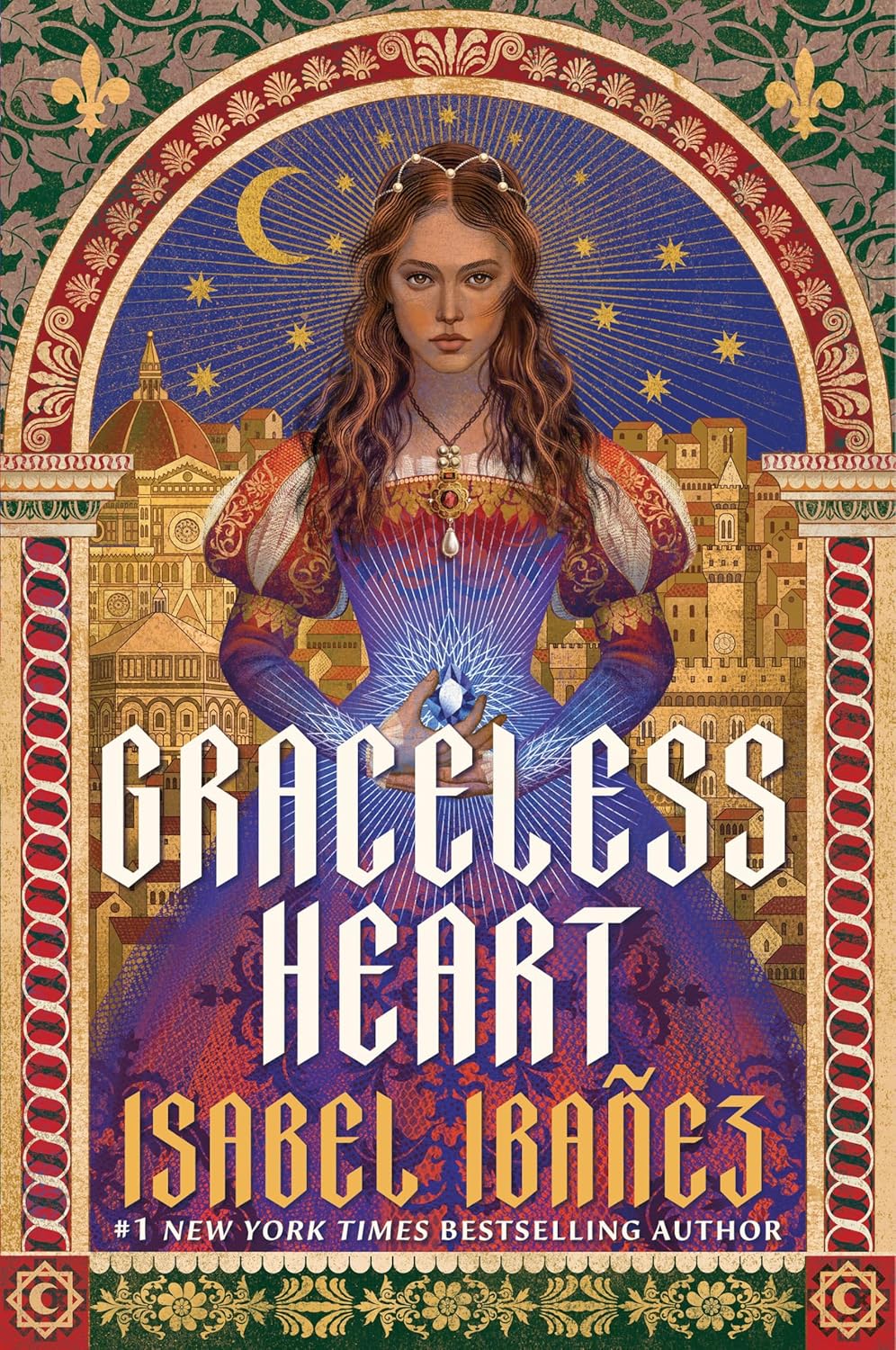
Graceless Heart by Isabel Ibañez
As a sculptress, Ravenna Maffei has always shaped beauty from stone but she has a terrible secret. Desperate to save her brother, she enters a competition hosted by Florence’s most feared immortal family, revealing a dark power in a city where magic is forbidden.
Now a captive in the cutthroat city of Florence, Ravenna is forced into a dangerous task where failure meets certain death at the hands of Saturnino dei Luni, the immortal family's mesmerizing but merciless heir. But as he draws her closer, Ravenna realizes the true threat lies beyond Florence’s walls.
The Pope’s war against magic is closing in, and Ravenna is no longer just a prisoner but a prize to be claimed. As trusting the wrong person becomes lethal, Ravenna must survive the treacherous line between a pope's obsession and the seductive immortal who might be the end of her ― or surrender her power to a city on the brink of war.
Time Period: Late Early 1900s
Primary Location: Louisiana
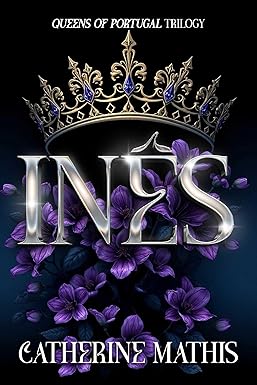
Inês by Catherine Mathis
In this engrossing launch to the Queens of Portugal trilogy, Catherine Mathis gives a fresh take on the tale of Pedro and Inês, Portugal’s real-life Romeo and Juliet. Pedro’s father would not have been king if not for his trusted advisor, Gonçalves. Once king, he wants no part in neighboring Castile’s royal convulsions though his son, Pedro, befriends powerful Castilians.
The all-consuming drive of the king is to ensure his line rules Portugal for centuries to come. He needs legitimate, strong heirs. The Infante Pedro loves a woman not deemed worthy to wear the crown as queen. Between father and son is Gonçalves, the king’s powerful, unquestioned counselor who is mentor to the son. Both Gonçalves and Pedro seek the attention of Inês.
There is a horrific cost to winning the love of Inês. She will not release her grip on Pedro until he keeps the two sworn oaths he made to her. Can Pedro do the impossible to satisfy Inês?
Inês is based on real people and events exploring a cultural touchstone of Portuguese history.
Time Period: 1300s
Primary Location: Paris
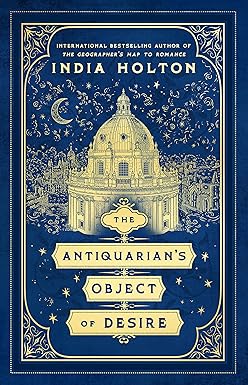
The Antiquarian's Object of Desire by India Holton
When two history professors and best friends are forced to fake hate to protect their reputations, chaos ensues, in the next rollicking historical-fantasy rom-com from beloved author India Holton.
Magical-antique experts Amelia Tarrant and Caleb Sterling have been best friends forever, although lately each has begun secretly wishing for more than friendship. But when rumors about their relationship spread, they're forced to fake being enemies to protect their reputations and keep their jobs.
The resulting arguments spark havoc across Oxford University, and when they cause an explosion while fighting over a magical antique, it’s the final straw for their exasperated faculty head. He dispatches them to a job in Cumbria where even they can’t get into trouble.…
Which proves just how wrong one man can be. In a stormbound old manor house, Amelia and Caleb face magical mayhem and rampaging ghosts that make the previous havoc look mild in comparison. Most troublesome of all, though, is the secret of how they feel about each other. When it comes to tackling deadly antiques, hiding the truth in their hearts could destroy them for real.
Time Period: 1890s
Primary Location: London
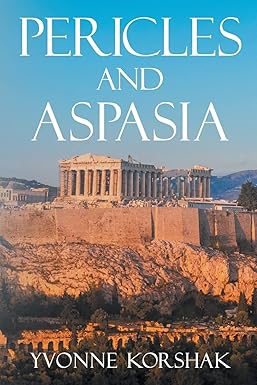
Pericles and Aspasia by Yvonne Korshak
Two lovers crest the wave of the golden age of Athens: Pericles, statesman and general, and Aspasia, his courtesan, a philosopher's daughter, and a brilliant woman in her own right. In a world of hierarchies, he is at the top when she arrives as little more than flotsam cast up on Athenian shores. Their love transcends social sanctions, enduring and deepening despite the grave threat it presents to Pericles' reputation as a leader of the Athenian democracy.
The novel unfolds against the background of the arts and history of the Golden Age, seen through the eyes of two individuals who lent their particular brilliance to make it "golden": Pericles, the great orator and visionary of democracy, and its most influential woman, Aspasia. Their story takes them from the Agora-Athens' marketplace to the Acropolis, from the raunchy Athenian Port Piraeus mercantile across the Aegean Sea to East Greece. Pericles and Aspasia—together and apart—navigate treacherous paths from venal calculations to impassioned philosophical inquiry, from high-stakes sea battles to the passions of family life.
Pericles and Aspasia engages issues that are vital today—the paradoxes of democracy, the tensions of hierarchy, the ironies of gender, and others—but this novel is immersed in classical Athens: the city, its sunshine, its physical presence, its people, and their struggles and aspirations.
Time Period: 5th century BCE
Primary Location: Athens

When the Tamarind Tree Blooms by Elaine Russell
Geneviève (Vivi) Dubois, a métisse, half-Lao/half-French, turns eighteen and leaves the French orphanage in Vientiane where she has been trapped for fourteen unhappy years. With only a distant memory of being torn from her mother’s arms at age four, she is determined to uncover what happened to her parents and locate her missing twin brother. But where to start? Orphanage and government officials refuse to reveal her origins. She leaves her strict, Catholic upbringing behind and emerges into the deeply divided world of 1931 French colonial Laos. Neither French colons nor native Lao readily accept her mixed heritage. Where does she fit in as she navigates her way, one foot stuck in each world? She is grateful for the kindness of her former French teacher, who offers her shelter and support. But she meets with prejudice, mistreatment, and rejection at every turn. Even falling in love is fraught with the cultural restrictions of two dissonant societies. A long circuitous route leads her to the past and a way forward to a better future, one where she is proud of who she is and rightfully claims her life as her own.
Time Period: 1800 BCE
Primary Location: Babylon
The Lost Seigneur by David Loux
The Lost Seigneur is a sequel to award-winning Chateau Laux. Set in the late 17th and early 18th centuries, it is the story of Jean-Pierre du Laux, a nobleman in southern France, who was wrongfully imprisoned during a time of religious intolerance and subsequently endeavors to return to his family. Many years have passed since he saw them and any reunion would have been impossible, without the unlikely help of a youthful companion that he meets along the way.
Time Period: 1200s
Primary Location: Normandy
What Once Was Promised by Louis Tribiano
He came for a better life, but it didn't turn out to be an easy one.
Sixteen-year-old Domenic Bassini sets out alone for America from his small village in Italy in 1914. He falls in love during a brief onboard affair with the beautiful Francesca, the wife of a man with Sicilian Mafia connections. But he loses her and arrives in Boston instead with an orphan stowaway named Ernesto Lentini in tow.
Domenic and Ernesto stay at the home of old family friends in Boston's Italian North End neighborhood, sharing a room with their son, Joe. Domenic becomes like a big brother to Joe and Ernesto, who become inseparable friends.
As the years and decades pass, youthful rivalries and fateful decisions lead to unpredictable and sometimes unsavory outcomes. Between moments of joy and great tragedy, the three friends' lives take very divergent paths amidst the turbulence of factions vying for power in the early 20th century Boston where the lines between politics, crime and policing are blurred.
But after all that has kept them apart, can Domenic, Ernesto, Joe and even Francesca, come together to settle the score with those who have spent a lifetime fighting against them?
Time Period: 1870s
Primary Location: Georgia
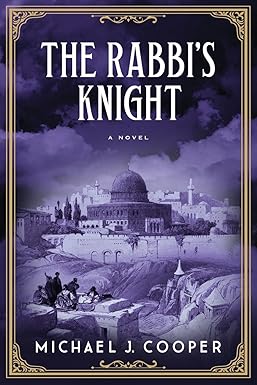
The Rabbi's Knight by Michael J. Cooper
The year is 1290. At the twilight of the Crusades, war-weary Knight Templar Jonathan St. Clair is garrisoned in the port city of Acre in the Holy Land. In possession of an ancient scroll with a cryptic inscription, he learns that it holds the key to unlock the secrets of Jerusalem's Temple Mount.
But time is running out. Acre will soon come under siege, and the one man able to divine the scroll's meaning, Rabbi Samuel of Baghdad, has been targeted for assassination. St. Clair apprentices himself to Rabbi Samuel and together they travel to Jerusalem.
On their pilgrimage, they are hunted by scheming emirs in the service of a bitter enemy of Rabbi Samuel. But they are aided in their quest by others: a brilliant young scholar, Isaac of Acre; a powerful young Scotsman, William Wallace; a learned Muslim mathematician, physician, and cartographer, al-Hasani; and a beautiful independent-minded woman, Zahirah, who avoids serving in an emir's harem by hiding in a leper colony on the shores of the Sea of Galilee.
Rabbi Samuel, St. Clair and the others will risk everything to fulfill their shared and sacred destiny as guardians of the Temple Mount.
Time Period: 1100s
Primary Location: York
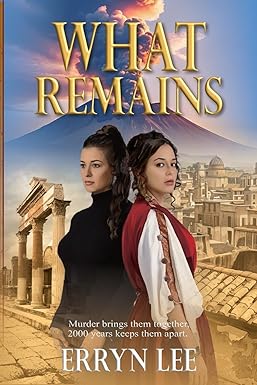
What Remains by Erryn Lee
Forensic anthropologist Tori Benino has just landed the opportunity of a lifetime: leading a dig at a long-buried Roman village lost to the eruption of Vesuvius. But when she uncovers the remains of a Praetorian guard hidden in an ancient latrine-clearly murdered-Tori realizes she's stumbled onto something far more sinister than a routine excavation. As she digs deeper into the past, her own carefully ordered life begins to fall apart.
Nearly two thousand years earlier, Thalia, the daughter of a wealthy merchant, is desperate to escape an arranged marriage to a brutal and politically powerful senator. Her only hope lies with a Praetorian soldier assigned to guard her-but trusting him could cost her everything.
As past and present collide, What Remains asks: When history is buried, what truths refuse to stay hidden?
Time Period: 1940s
Primary Location: London
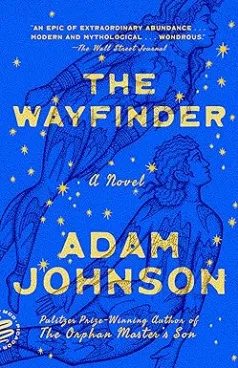
The Way Finder by Adam Johnson
Talking corpses, poetic parrots, and a fan that wafts the breath of life―this is the world young Kōrero finds herself thrust into when a mysterious visitor lands on her island, a place so remote its inhabitants have forgotten the word for stranger. Her people are desperate and on the brink of starvation, and the wayward stranger offers them an impossible choice: they can remain in the only home they’ve ever known and await the uncertainty to come, or Kōrero can join him and venture into unfamiliar waters, guided by only the night sky and his assurance of a bountiful future in the Kingdom of Tonga. What Kōrero and her people don’t know is that the promised refuge is no utopia―instead, Tonga is an empire at war and on the verge of collapse, a place where brains are regularly liberated from skulls and souls get trapped in coconuts with some frequency.
The perils of Tonga are compounded by a royal feud: loyalties are shifting, graves are being opened, and everyone lives in fear of a jellyfish tattoo. Here, survival can rest on a perfectly performed dance or the acceptance of a cup of kava. Together, the stranger and Kōrero embark upon an epic voyage―one that will deliver them either to salvation or to the depths of the Pacific.
Time Period: 1200s
Primary Location: China
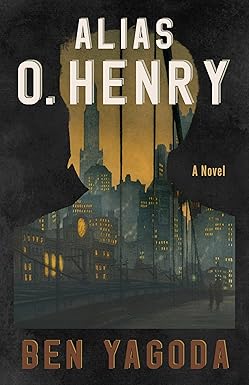
Alias O. Henry by Ben Yagoda
O. Henry, born William Sidney Porter, arrived in New York City fresh from the Ohio Penitentiary, where he had served three and a half years for embezzlement. It was the dawn of the twentieth century, a time of remarkable change when the city’s physical presence was being altered by new skyscrapers and subways, and its character by waves of immigrants. The American magazine had just reached its pinnacle as an enterprise, and the short story was the most popular medium in entertainment. Porter was in the city to write. From his cell, he had already sold a number of stories to big magazines, and within five years of arriving in Manhattan, he would become the most successful fiction writer in the country. But he never—never—said anything about his prison experience, or, indeed, anything about his past life. Anything true, that is. In life as well as on the page, Porter was a yarn-spinner of the highest order.
Time Period: 1860s–1910
Primary Location: New York City
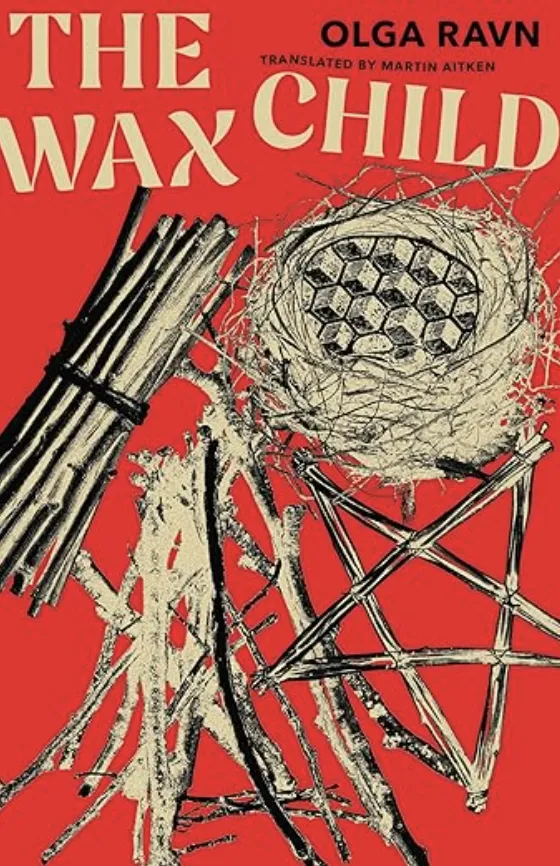
The Wax Child by Olga Ravn
In seventeenth-century Denmark, unmarried noblewoman Christenze Kruckow and several other women are accused of witchcraft. They are rumoured to be possessed by the Devil, who comes to them in the form of a tall, headless man and gives them dark powers. It is said they perform unchristian acts and can steal people’s happiness, cause pestilence, illness, or even death. And once the rumour of witchcraft takes hold, they are all in danger of the stake.
Narrated by a wax doll created by Christenze one dark night in 1620, The Wax Child is an unsettling, dizzying horror story about brutality and power, nature and witchcraft, set in the fragile communities of pre-modern Europe.
Deeply researched and steeped in visceral, atmospheric detail, The Wax Child is based on a series of infamous witchcraft trials that took place in Northern Jutland. Full of lush, vivid storytelling and alarmingly rich imagination, Olga Ravn weaves in quotes from original sources, such as letters, court documents, magic spells, and Scandinavian grimoires.
Time Period: 1600s
Primary Location: Denmark
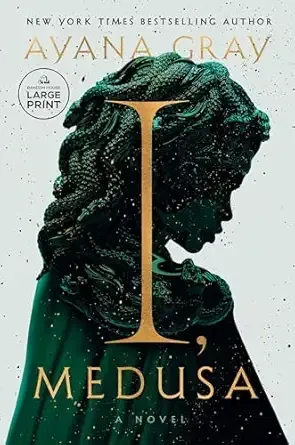
I, Medusa by Ayana Gray
Meddy has spent her whole life as a footnote in someone else’s story. Out of place next to her beautiful, immortal sisters and her parents—both gods, albeit minor ones—she dreams of leaving her family’s island for a life of adventure. So when she catches the eye of the goddess Athena, who invites her to train as an esteemed priestess in her temple, Meddy leaps at the chance to see the world beyond her home.
In the colorful market streets of Athens and the clandestine chambers of the temple, Meddy flourishes in her role as Athena’s favored acolyte, getting her first tastes of purpose and power. But when she is noticed by another Olympian, Poseidon, the course of Meddy’s promising future is suddenly and irrevocably altered.
When her locs are transformed into snakes as punishment for a crime she did not commit, Medusa must embrace a new identity—not as a victim, but as a vigilante—and with it, the chance to write her own story as mortal, martyr, and myth.
Time Period: Mythic Antiquity
Primary Location: Greece

The Burning Library by Gilly MacMillan
On a frigid, windswept day in Scotland’s Western Isles, Eleanor Bruton’s body is discovered on the shore. To her family Eleanor was an ordinary middle-aged woman. She did flower arrangements and plumped kneeler cushions at church. Little did they know she was harboring a dark and all-consuming secret. A scrap of fraying embroidery that seems worthless at first glance.
For over a century, two rival organizations of women have gone to deadly lengths to secure the valuable artifact in the hopes of finding the original medieval manuscript from which it was torn. The Order of St. Katherine: devoted to the belief that women must pull strings in the shadows to exercise control. And the Fellowship of the Larks, determined to amass as many overt positions of power for women as possible…so long as their methods of doing so never come to light.
When Dr. Anya Brown garners international attention for her translation of the cryptic Folio 9, she is handpicked by Diana Cornish, a professor and high-ranking member of the Fellowship, to join the exclusive Institute of Manuscript Studies in St. Andrews. Unbeknownst to Anya she’s been recruited at great personal danger to translate ancient texts that the Fellowship believes critical to their mission.
Meanwhile at Scotland Yard, Detective Constable Clio Spicer begins a private investigation into the death of Eleanor Bruton.
As all the women grow further entangled in this ancient web, circumstances spin wildly out of control and their lives may be in grave danger.
Time Period: 1930s
Primary Location: Oxford
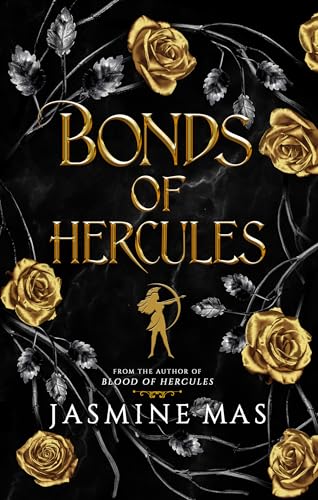
Bonds of Hercules by Jasmine Mas
I'm Hercules, but my powers are not what they seem.
I'm trapped in a marriage with my two enemies and I've accidentally joined a cult. To make matters worse, Augustus and Kharon are trying to seduce me. It doesn't help that my mentors, Achilles and Patro, are acting really strange.
Now, a dangerous prisoner has escaped from the Underworld, and things are spiraling out of control.
Men are fighting over me.
Mysteries are unfolding left and right.
And I’ve had enough.
Time Period: Mythic Antiquity
Primary Location: Greece
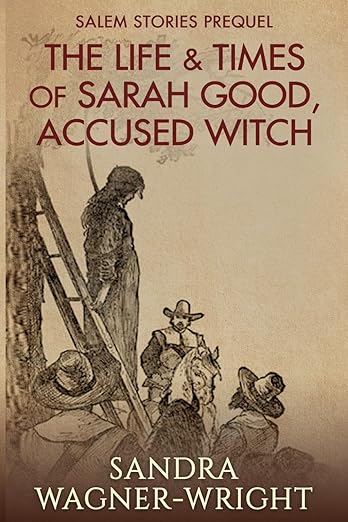
The Life & Times of Sarah Good, Accused Witch by Sandra Wagner-Wright
In 1672, Sarah Solart Poole Good and Ann Carr Putnam begin life on seemingly equal footing—both daughters of well-off families in colonial Massachusetts. But as the years pass, their fortunes diverge. Sarah’s life spirals into poverty, homelessness, and mental distress. Ann marries into wealth and stability, becoming the wife of Thomas Putnam, the Younger, heir to one of Salem Village’s most powerful families.
Yet even privilege cannot shield the Putnams from misfortune. Thomas is disinherited in favor of his younger brother, and Ann’s expected inheritance proves meager. By 1692, their lives are simmering with disappointment and resentment.
Then the witchcraft hysteria begins. In February, their daughter—Ann Putnam, the Younger—is struck by strange fits. She claims Sarah Good is tormenting her with witchcraft. Her father, Thomas, publicly accuses Sarah of witchcraft.
In June, Sarah Good is convicted. By July, she is hanged.
Time Period: 1600s
Primary Location: Salem, Massachusetts
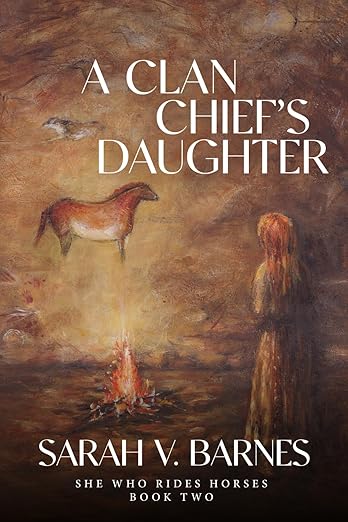
A Clan Chief’s Daughter: She Who Rides Horses by Sarah V. Barnes
In book one, Naya and a magnificent chestnut red filly, brought together through a mystical encounter, begin a relationship destined to change the future of humans and horses alike. In book two, Naya must contend with the consequences of the forces she and the filly have unwittingly set in motion. Daughter of a clan chief, Naya returns to her people after a winter spent in the company of the wild horses, only to discover that danger threatens. Enemies of Naya’s father seek to exploit the horses Naya has tamed in order to undermine his leadership. Plagued by nightmares of what could happen to the filly and her herd at the hands of men seeking power and control, Naya must decide whether protecting the horses and remaining loyal to her father require the sacrifice of her heart’s desire.
Based on extensive interdisciplinary research, She Who Rides Horses imagines an encounter between a girl and a horse that is both timeless and grounded in fact. A story filled with adventure, peril, love and betrayal, the saga of Naya and the red filly, begun in book one and continued in book two, portrays fundamental shifts that occurred when humans went from living as herders and hunter/gatherers to becoming mounted nomads, capable of spreading their language, lifestyle and beliefs across a huge swath of Eurasia and beyond. The domestication of the horse altered the course of history, contributing to the rise of patriarchy and accelerating the diffusion of new assumptions about the relationship between humans and the natural world that we are still contending with today. This is how it may have all begun…
Time Period: 1200s
Primary Location: Scottish Highlands
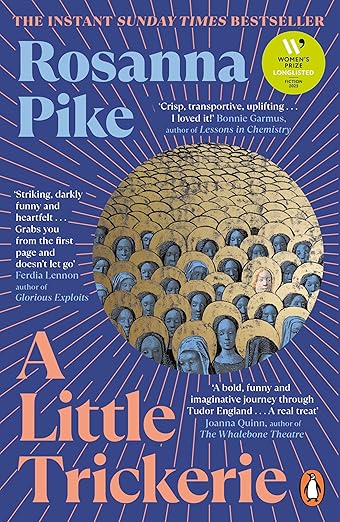
A Little Trickerie by Rosanna Pike
Born a vagabond, Tibb Ingleby has never had a roof of her own. Her mother has taught her that if you’re not too bound by the Big Man’s rules, there are many ways a woman can find shelter in this world. But now her ma is gone.
As she journeys through the fields and forests of medieval England, Tibb discovers that there are people who will care for her, as well as those who mean her harm. And there are a great many others who are prepared to believe just about anything…
So, when the opportunity presents itself to escape the shackles society has placed on them, Tibb and her new friends conjure an audacious plan: her greatest trickerie yet. But before they know it, their hoax takes on a life of its own, drawing crowds - and vengeful enemies - to their door.
Time Period: 1500s
Primary Location: London
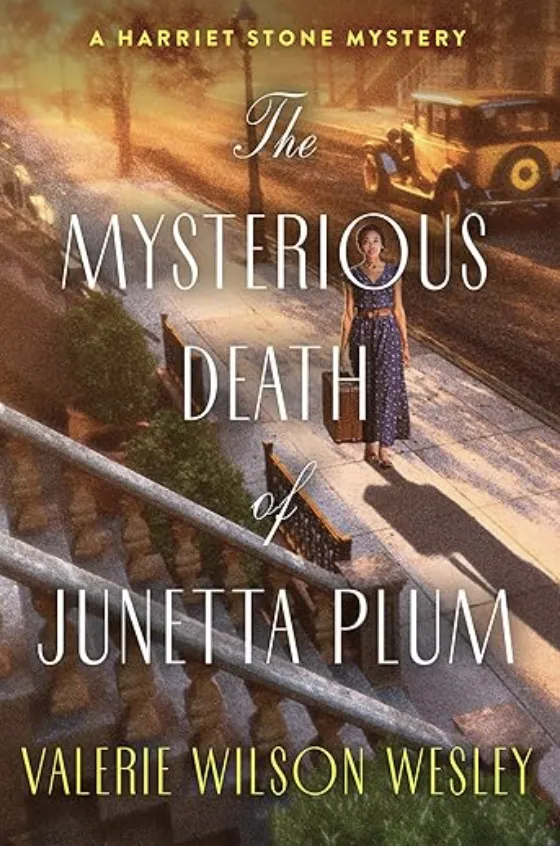
Bonds of Hercules by Jasmine Mas
1926: Harriet Stone, a liberated, educated Black woman, and Lovey, the orphaned, biracial 12-year-old she is bound to protect, are Harlem-bound, embarking on a new, hopefully less traumatic chapter in their lives. They have been invited to move from Connecticut by Harriet’s cousin, Junetta Plum, who runs a boardinghouse for independent-minded single women.
It’s a bold move, since Harriet has never met Junetta, but the fatalities of the Spanish flu and other tragedies have already forced her and Lovey to face their worst fears. Alone but for each other, they have little left to lose—or so it seems as they arrive at sophisticated Junetta’s impressive brownstone.
Her cousin has a sharp edge, which makes Harriett slightly uncomfortable. Still, after retiring to her room for the night, she finally falls asleep—only to awaken to Junetta arguing with someone downstairs. In the morning, she makes a shocking discovery at the foot of the stairs.
Time Period: 1910s
Primary Location: New Jersey
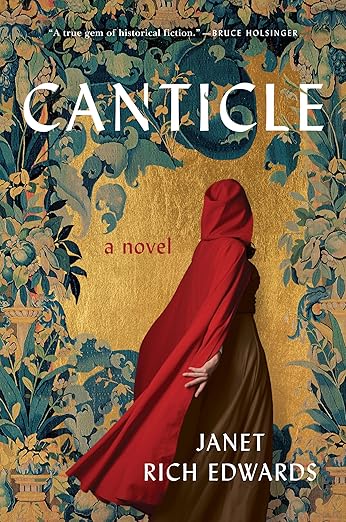
Canticle by Janet Rich Edwards
Aleys is sixteen years old and unusual: stubborn, bright, and prone to religious visions. She and her only friend, Finn, a young scholar, have been learning Latin together in secret—but just as she thinks their connection might become something more, everything unravels. When her father promises her in marriage to a merchant she doesn’t love, she runs away from home, finding shelter among the beguines, a fiercely independent community of religious women who refuse to answer to the Church.
Among these hardworking and strong-willed women, Aleys glimpses for the first time the joys of belonging: a life of song, meaning, and friendship in the markets and along the canals of Bruges. But forces both mystical and political are at work. Illegal translations of scripture, the women’s independence, and a sudden rash of miracles all draw the attention of an ambitious bishop—and bring Aleys and those around her into ever-increasing danger, a danger that will push Aleys to a new understanding of love and sacrifice.
Time Period: 13th century
Primary Location: Bruges, Belgium
Missed a past list? Catch up here: